

Guide
How to Choose Your First Fishing Rod
A fishing rod does three jobs at once: it casts the bait, it tells you what is happening at the other end of the line, and it absorbs the lunges of a hooked fish. A good first rod does all three well for the kind of fishing you will actually do. That matters far more than the price tag or the number of letters printed on the blank.
Start with the water and the fish
Before looking at any rod, picture where you will fish most often. Small rivers and canals reward a short, light rod that is easy to handle under trees and along overgrown banks. Big lakes and reservoirs call for something longer that casts further and keeps the line clear of marginal weed. Then think about the fish. Perch and trout suit light spinning gear; pike and zander need a stronger rod that can throw heavier lures; carp, tench and bream are usually caught on feeder or carp rods fished from one spot for hours. In our own range that maps to the Big Bass Amazon Xtreme for pike and zander, and to the Big Bass Trophy Catch feeder rod when you expect to sit on one spot with three quiver tips to choose from.
If you are not sure yet, a spinning rod of about 2.4–2.7 metres is the most versatile place to start. It will cast small lures and floats, it is light enough to carry all day, and the skills you learn with it carry over to every other style. The Big Bass Bonanza is exactly that rod here: 2.40 m of carbon rated 10–40 g. If you know you will mostly fish small spinners and jigs, the Big Bass Splash does the same job at 2.10 m with a softer tip.
Length: reach against control
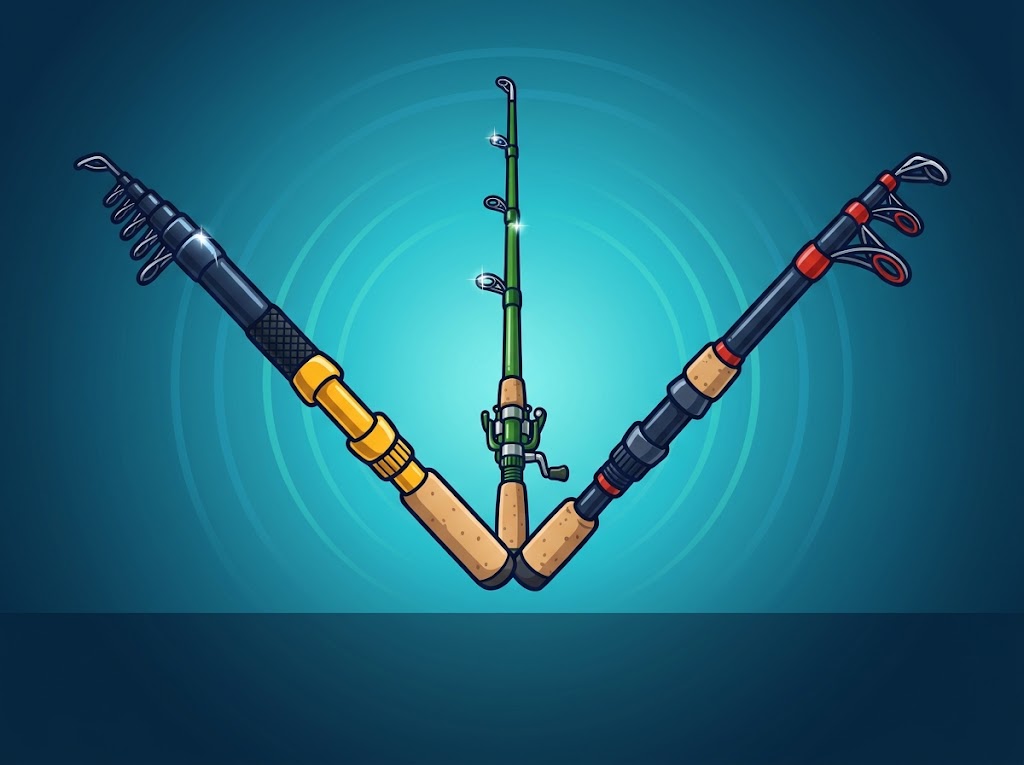
A longer rod casts further, gives better line control at distance and helps steer a fish away from snags near your feet. A shorter rod is more accurate, easier to handle in a boat or on a crowded bank, and less tiring to use. Telescopic rods collapse to a fraction of their length, which makes them ideal for travel and for keeping in the car, at the cost of a little extra weight and slightly less feel than a two-piece rod. The Big Bass Mission Fishin’ is the telescopic option in our range: it fishes at 2.70 m and closes down to 62 cm, short enough for a rucksack.
Casting weight and power
Every spinning and feeder rod carries a casting weight, printed on the blank as something like 10–40 g. It describes the range of lure or feeder weights the rod is designed to cast comfortably. Fish near the middle of that range: a lure that is too light will not load the rod and falls short, while one that is too heavy strains the blank and makes casting awkward or risky. Carp rods use a test curve instead, measured in pounds. A higher test curve means a stiffer rod that throws heavier leads and has more lifting power. The Bigger Bass Bonanza, our 3.60 m carp rod, sits at 3 lb, which handles long-range work on most lakes without being punishing to cast all day.
Action: where the rod bends
Action describes how far down the blank the rod bends under load. A fast-action rod bends mostly in the top third. It feels crisp, transmits small bites and sets the hook quickly, which suits jigging and soft plastics. A moderate-action rod bends into its middle section. It is more forgiving, cushions sudden runs, keeps treble hooks from pulling out and is kinder while you are still learning to play fish. For a first rod, moderate or moderate-fast is a safe choice.
Material, sections and handle
Carbon rods are light, stiff and sensitive. Glass and carbon-glass composite rods are heavier but tougher and more tolerant of knocks, which is worth considering for children or for rough use. Two-piece rods offer the best balance of feel and practicality; one-piece rods are rare outside specialist use. Handles come in cork or EVA foam. Cork feels warmer and lighter, while EVA is hard-wearing and easy to clean. Whichever you choose, check that the reel seat holds a reel firmly without any wobble.
Balance it with the right reel and line
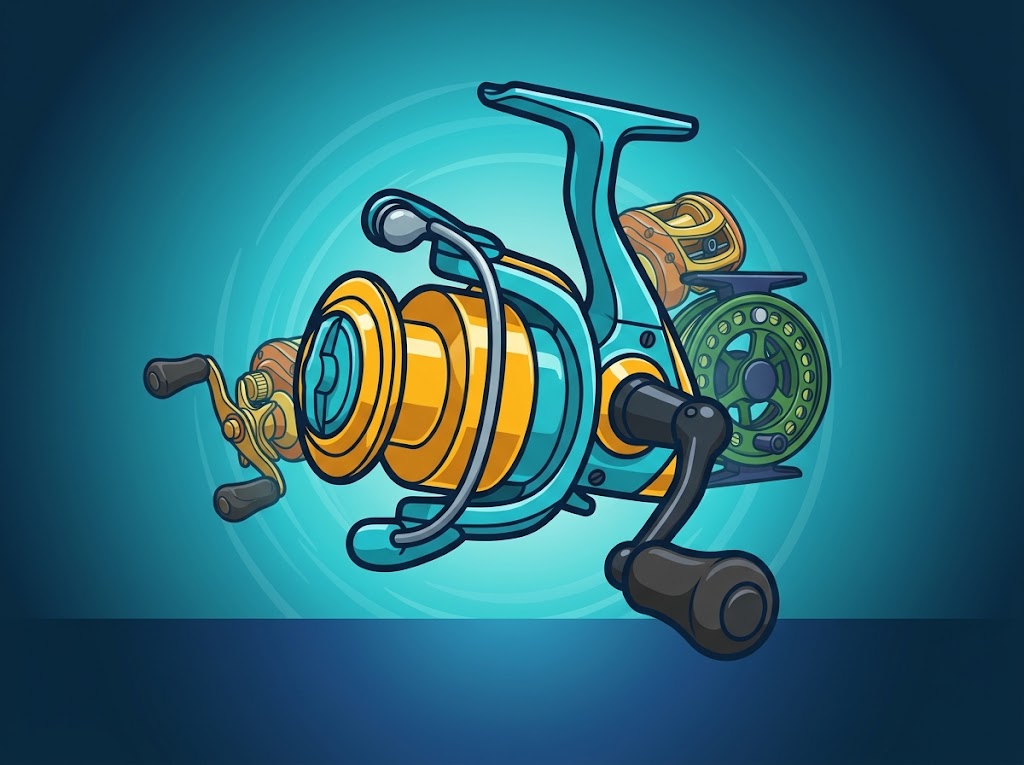
A rod only performs as part of a set. A 2.4–2.7 metre spinning rod pairs naturally with a 2500 or 3000 size reel — the Big Bass Bonanza Keeping It Reel is the 3000 in our range, and the Big Bass Reel Repeat is the lighter 2500 for thin braid and perch. Braided line gives better bite detection and longer casts; monofilament stretches more, which is forgiving for beginners and for fishing close in. With the reel fitted, hold the rod at the handle: it should feel balanced rather than tip-heavy, because a tip-heavy rod quickly tires your wrist.
A short checklist
- Where will I fish most, and for which fish?
- Is the length right for those banks, or for a boat?
- Does the casting weight cover the lures or feeders I plan to use?
- Is the action forgiving enough while I learn?
- How will I carry it, and does it need to pack down small?
Answer those honestly and the right rod usually picks itself. If you are still torn between two, write to us with where and how you plan to fish and we will help you narrow it down. If you would rather not assemble a set piece by piece, the Big Bass Boxing Bonus Round puts a 2.40 m rod, a 3000 reel, braided line and a loaded tackle box in one box.